Know the tool
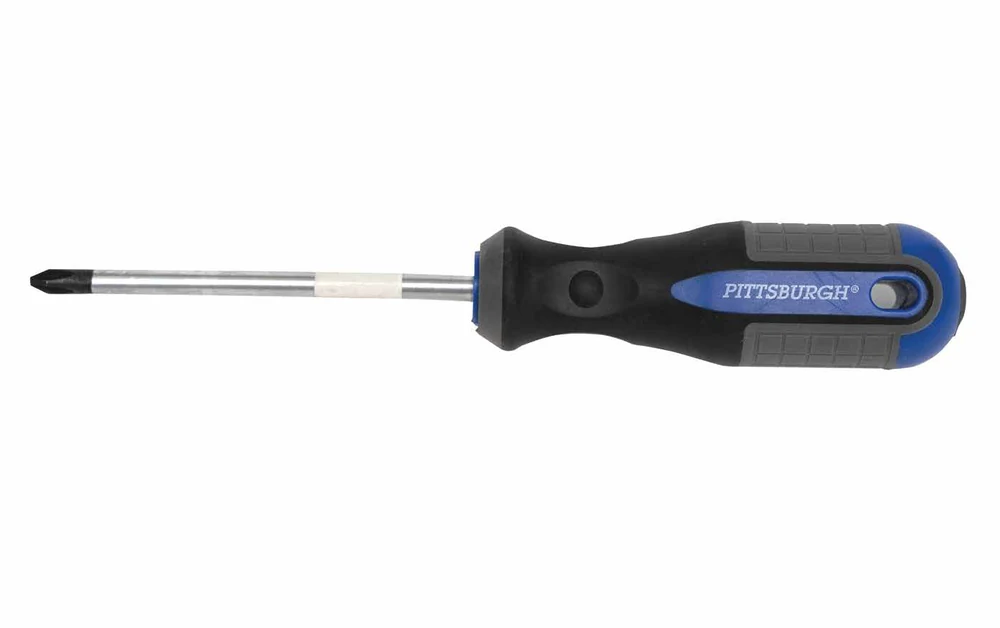
Your goal: Drive and remove an instructor-selected practice screw while keeping the tip seated and aligned.
A screwdriver has a handle, shaft, and shaped tip. The tip must match the screw's recess in both type and size; a loose fit damages the head and slips easily.
Identify the tip, screw-head recess, handle, and the safe guiding position demonstrated on the actual driver.
Watch and prepare
At your station
- A matching hand screwdriver and ordinary right-hand-thread wood screw selected by the instructor.
- A secured scrap with an instructor-prepared suitable pilot hole; screw length, backing, and stopping point are checked before use.
Demonstration and setup
- Watch the instructor match the tip, align the screw with the pilot hole, and demonstrate safe handle/guiding hand positions.
- Keep hands out of the possible slip path and away from the point or intended exit. The sample is clamped, not held under the tip.
- Learn the selected stopping point and controlled removal. Do not use a screwdriver as a chisel, lever, or hole punch.
Practice
Start after the demonstration and the instructor's setup check. Stop and ask for help if the work moves or the tool does not behave as demonstrated.
Check the fit.
Compare the tip with the screw head. Seat it fully and have the instructor confirm the fit, pilot hole, and secure sample.
Start aligned.
Align the screw and driver with the pilot hole. Use the demonstrated grip to maintain seating pressure without placing a hand in the slip path.
Drive to the target.
For this right-hand-thread sample, turn clockwise when looking at the head. Stop at the assigned point; stop sooner if the tip slips or the wood splits.
Remove and inspect.
Turn counterclockwise to remove the practice screw as demonstrated. Check the head and hole for damage, then return the screw and tool.
Show your skill
Show the instructor these observable results before using the skill in a project:
- The correct tip stays seated and the driver remains aligned.
- The sample is secured and hands stay out of the slip and point paths.
- The screw reaches the assigned stopping point without stripping the head or splitting the sample.
Check your understanding
If the tip keeps jumping out of the screw head, should you simply turn harder?
Reveal the explanation
No. Stop and check the tip type/size, condition, alignment, seating, and pilot hole with the instructor. More force can make the slipping and damage worse.
Answer aloud or on paper, then compare with the explanation.
Use the skill
Use the skill again at the next instructor-approved practice station.
Maplewoodshop materials adapted with permission. Images © Maplewoodshop. Practice tasks and learning checks by STEM Guides. Maplewoodshop.