Know the tool
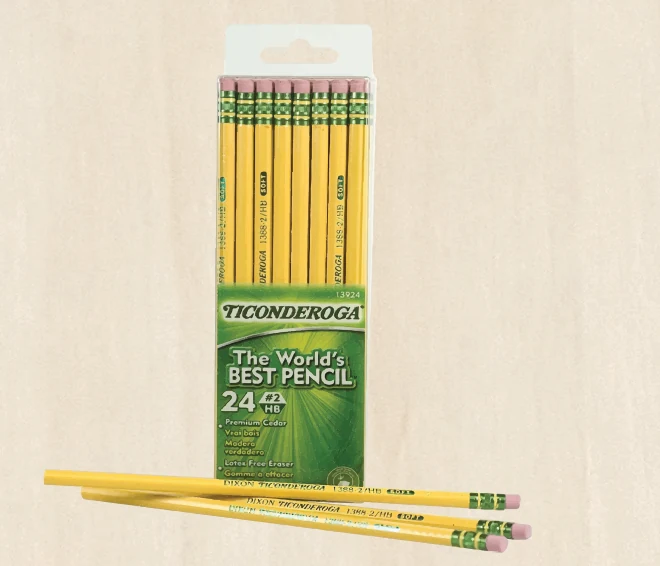
Your goal: Produce a narrow V mark, a straight layout line, and an unambiguous waste mark.
A pencil records a decision; a wide or smudged mark makes that decision harder to follow. A reference edge is the edge you measure or square from.
Identify the pencil point, the reference edge, the line, and the waste side marked with an X.
Watch and prepare
At your station
- A prepared pencil, supported scrap or paper, a ruler, and a combination square.
- A layout-only sample; no sawing in this lesson.
Demonstration and setup
- Watch the instructor mark a small V with its point at the measured position, then draw one narrow line along a straightedge.
- Use the class sharpening method and keep fingers away from the sharpener's cutting parts.
- Agree which side is waste before marking X. A waste mark does not show the actual saw-kerf width.
Practice
Start after the demonstration and the instructor's setup check. Stop and ask for help if the work moves or the tool does not behave as demonstrated.
Choose a reference.
Point to one sound end or edge. Label it as your reference so the next person knows where the measurement starts.
Place a precise mark.
Measure 3 inches from that reference. Make a small V whose point sits at the measured position, then recheck it.
Draw the layout line.
Seat the combination square as demonstrated. Draw one narrow line through the V point without shifting the square.
Communicate the plan.
Choose the intended waste side with the instructor, add an X there, and label the kept piece. Explain the marks to a partner.
Show your skill
Show the instructor these observable results before using the skill in a project:
- The V point is at the measured position, rather than somewhere inside a thick mark.
- The line is clear, and the reference and waste side can be identified.
- A partner can explain the plan from your marks without guessing.
Check your understanding
Why can a thick pencil line lead to two different finished lengths?
Reveal the explanation
Its two edges are at different positions. A narrow mark and an agreed cutting side communicate the intended boundary more clearly; the saw still removes a kerf.
Answer aloud or on paper, then compare with the explanation.
Use the skill
Apply it in a project
Maplewoodshop materials adapted with permission. Images © Maplewoodshop. Practice tasks and learning checks by STEM Guides. Maplewoodshop.