Know the tool
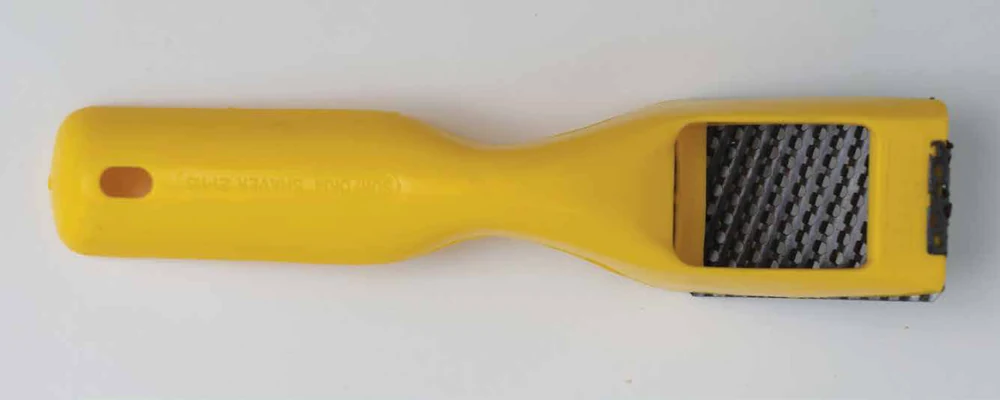
Your goal: Use controlled shaping strokes and stop before removing material beyond the intended shape.
A rasp shapes wood with a coarse cutting surface. Tooth pattern and cutting direction depend on the tool. Identify the cutting stroke on your classroom rasp before starting.
Identify the cutting surface and the safe grip/support areas demonstrated on the actual model.
Watch and prepare
At your station
- An inspected rasp, a securely held practice scrap with a simple pencil outline, and eye protection.
- The instructor's dust-control and tool-cleaning arrangement.
Demonstration and setup
- Have the instructor identify this rasp's cutting stroke and demonstrate where both hands can safely grip or support it.
- Keep fingers off the cutting surface and out of the tool's travel beyond the wood.
- Use light, controlled strokes. Ask for help with clogged teeth; do not clear them with fingers.
Practice
Start after the demonstration and the instructor's setup check. Stop and ask for help if the work moves or the tool does not behave as demonstrated.
Set a shaping target.
Mark a small amount to remove from the edge. Secure the sample with the target area accessible and the tool path clear.
Rehearse the stroke.
With the instructor, show the grip, support hand position, and cutting direction before removing material.
Shape in stages.
Make a few controlled strokes, then stop and compare with the outline. Repeat only while material remains outside the intended shape.
Check and clean.
Inspect the edge without rubbing fingers over the cutting surface. Use the class cleanup method and return the rasp safely.
Show your skill
Show the instructor these observable results before using the skill in a project:
- The work stays fixed and the demonstrated hand positions are maintained.
- The tool removes wood in its intended cutting direction without excessive force.
- You inspect frequently and stop before cutting past the outline.
Check your understanding
Why is it useful to stop and check after only a few rasp strokes?
Reveal the explanation
The rasp removes material quickly. Frequent comparison helps you approach the intended shape without removing wood that the finished part needs.
Answer aloud or on paper, then compare with the explanation.
Use the skill
Apply it in a project
Maplewoodshop materials adapted with permission. Images © Maplewoodshop. Practice tasks and learning checks by STEM Guides. Maplewoodshop.